
HHSCM Alumni Spotlight
Wilson Chandomba (Class of 2023)
Goodwill Ambassador, Fight the Fakes Alliance
Zimbabwe
About Wilson
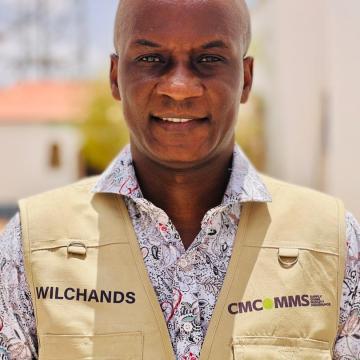
Wilson Chandomba, CSCL, is a Goodwill Ambassador for the Fight the Fakes Alliance and a recognized leader in strengthening health supply chain systems across Africa. He works with global and continental bodies to advance quality assurance, professionalization, and GSDP implementation. He serves on the Africa Technical Working Group on Substandard and Falsified Medical Products and chairs its Communications Subgroup, driving advocacy to secure the supply chain and protect patient safety.
-
What motivated you to pursue this certificate?
There are two disciplines here. When you talk of health supply chain, it's a matter of life and death. When you need pharmaceutical or health products, their quality, safety and effectiveness is to be preserved in the supply chain. Then when you combined with the humanitarian aspect now, it becomes even more pronounced. Like in Africa where we have got natural disasters. We have pandemics, not only the COVID, but we've got Mpox, Ebola, we have Cholera, and so forth. So I needed to learn the best practices. Georgia Tech is known for producing very practical models. We look at the modeling done during the COVID pandemic with UNICEF and so forth. So I wanted to learn from the best and then replicate that knowledge here across Africa.
How were you able to apply the skills you learned in the program's courses in the real world?
The impact is actually quite pronounced. Firstly, this course is divided into models, especially responsive supply chain, issues of demand and so forth. I was able to get a deeper understanding of how we can plan, how we can at least have an idea of demand or even how we can plan for the likelihood of any pandemic. Then across Africa, we have been building that capacity. Training to the extent that on the 7th of August, I actually received Africa supply chain excellent awards on yield and humanitarian supply chain for the work that we've been doing. I've been to Ivory Coast, Uganda, Somalia, Kenya, different countries where we are also doing health supply chain systems strengthening and doing a lot of work across Africa. So indeed, that course enhanced my theoretical underpinnings in the health supply chain as well as the applicability of certain models. So yes, I've been able to use it, and we've seen real impacts across Africa.
What were some of the most valuable takeaways that you were able to apply either in your role at the time or your current role?
One of the key takeaways that really changed my professional career was on responsive supply chain. Remember, when you are responding to a humanitarian set up, sometimes there's a contradiction [with] cost effectiveness. You want to optimally manage cost, but when it comes to humanitarian, lives matter. So how do you get a balance? I'm forgetting the name of the professor, but she taught us with real life examples—things like prepositioning of stock, data modeling, how can you look at things using the COVID examples….Now we can use mathematical modeling to predict and to plan and at least have a certain amount of humanitarian stock available, either prepositioned or safety stock, to be able to save lives…So that was one of the biggest takeaways because we're also working with the professors who were at the forefront of COVID pandemic, doing models. They had hands on experience with the COVID pandemic… As a result of that, it rubbed on to us. So in our own way, with the resources we have in Africa, we are able to replicate it in a low resource setting.
Did the global aspect of the program have any value to you being able to connect with professionals in a similar industry around the world?
Yes, it does in the sense that when you, for example, come from Africa—Southern Africa to be particular—sometimes you become a silo. A silo in that whatever you are accustomed to, you think is normal. But when you interact with someone from Asia, they bring a different perspective; someone from Europe, South America, North America — it brings a different feel to it. You also understand how they've handled those situations. So indeed, it was very global. There was a lot of interaction, sharing of experience.